Category: travel tips

  • A Trip That Goes Right: The Quiet Luxury of Having Someone in Your Corner

    A Trip That Goes Right: The Quiet Luxury of Having Someone in Your Corner

    Steph’s Treks may earn a commission at no extra cost to you.

    The Trip You Never Have to Think About

    The best trips have a particular quality that is easy to miss, because it is mostly made of things that did not happen. No one stood in the wrong line. No one wondered whether the car would come. The room faced the water, the dinner reservation was waiting, and the first evening unfolded like a held breath finally let go. When travel goes right, it feels less like logistics and more like grace.

    Plenty of couples create that feeling entirely on their own, and they should be proud of it. Others discover that the ease they want is exactly what a good travel agent is for. Here is an honest look at each, along with a few tools for anyone who prefers to hold the map themselves.

    Rush hour traffic crawling along a city road toward a glowing orange sunset
    Rush hour, and the car still has not come. Photo: wal_ 172619 via Pexels

    What Booking on Your Own Does Beautifully

    Self-booking shines when a trip is simple. A direct flight, a long weekend, a single hotel you already know and love: none of these asks for much more than a calendar and a credit card. If you enjoy the hunt, comparing dates and watching fares, that pleasure is real, and there is no reason to give it up.

    Flights booked straight with an airline also carry a small safety net. According to the U.S. Department of Transportation, a ticket bought at least seven days before departure must come with either a 24-hour hold at the quoted fare or a 24-hour window to cancel for a full refund. The same page notes that this requirement does not apply to tickets bought through travel agents or online agencies, though they may offer something similar. It is a useful thing to know before you decide where to buy a simple ticket.

    Rows of airport departure boards listing flights, gates and boarding status
    The departure board: simple when one flight goes right. Photo: Atlantic Ambience via Pexels

    Where an Agent Earns Her Place

    The picture changes as a trip gains moving parts: a resort week with flights and transfers, a honeymoon across two islands, a river cruise with a hotel on either end. Each piece may be simple on its own. Together they become a small project, and the weak link is rarely visible until something slips.

    An agent is the person who sees the whole. She knows that two resorts that look identical online can feel entirely different in person: one buzzing at the pool until midnight, another so hushed you can hear the palms. For a couple, that difference is the trip. Knowing which room faces the sunrise, which wing sits above the nightclub, and which category is truly worth the step up is knowledge that photographs rarely supply. It comes from experience, from supplier representatives who answer questions, and from the accounts of other travelers.

    Then there is the matter of time. Comparing resorts, reading policies and reconciling dates can swallow evenings and weekends, and the result is often a decision made at midnight out of fatigue. A good agent hands you a short list of places that suit the two of you, shaped by what you tell her, and spares you the other forty tabs.

    Some benefits are quieter still. Agents work with trusted supplier partners, and those relationships can open doors: a welcome amenity, a room request noted properly, an occasional upgrade or perk when a property chooses to offer one. None of it is guaranteed, and I would not promise it. But a human being who knows the right person to ask is a very different thing from a form that disappears into a queue.

    The moment people tend to remember is when something goes wrong. Storms arrive, a room is not what was described. Having someone to call, who already knows your reservations and will work the problem while you find a quiet place to sit, is the part of the service that is hardest to appreciate until you need it. ASTA, the American Society of Travel Advisors, describes advisors as people who “anticipate challenges, solve problems, and provide personalized guidance.” In a 2023 ASTA survey of 524 Americans, 49 percent agreed that an advisor’s expertise would put them more at ease about their travel plans, as reported by Travel Weekly.

    Flights are the clearest example. When a booked flight is cancelled or changed, an agent does the legwork: finding alternatives, rebooking you and staying on it until you are settled, so that you are not the one holding the line in a crowded terminal. A traveler who booked through a large booking site can be re-ticketed, or left to sort it out alone. That is not true of every case, and some travelers are looked after beautifully, but when the week matters, it is a comfort to have someone else carrying the phone.

    Travelers with rolling suitcases moving through a busy airport departures hall beside the check-in counters
    A crowded terminal is no place to be holding the line. Photo: Martijn Stoof via Pexels

    There is also the question of scale. ASTA’s 2026 fact sheet reports that travel advisors sell about 70 percent of cruise bookings and 60 percent of tour packages, and that roughly a quarter of all travel is booked through a travel agency.

    A quiet airport lounge with cream leather armchairs, a round table set with pastries and an orchid, and soft lighting
    A quiet lounge, the way a delay should feel. Photo: Connor Danylenko via Pexels

    Romance Lives in the Details

    A candlelit dinner table set for two on a beach at sunset beside the sea
    A candlelit table for two by the sea. Photo: M ZIHAT via Pexels

    Honeymoons and anniversaries are where an agent’s attention is most visible, because the occasion lives in small things. Whether the resort is genuinely adults-only or merely adult-friendly. Whether a dinner for two on the sand needs to be arranged days ahead. Whether the room is a private cocoon or sits above the busiest walkway. These are not things a booking engine asks about, yet they decide whether a week feels like a postcard or like your own.

    It is also why I care about matching a couple to the right mood: serene or lively, secluded or social, polished or barefoot. Our guide to Sandals, Couples Resorts and Secrets is a small example of that thinking, with the three side by side.

    A Plain Word About Cost

    A natural question is whether an agent costs extra. At Steph’s Treks, the answer is no: there is no fee for the service. Travel suppliers typically build commission into their prices, and that is true whether you book through an agent, through one of the big booking sites or on your own. ASTA has made the same point publicly, noting that commissions are often built into supplier pricing. The price is the price. What changes is whether anyone is standing beside you when you need help. It is always fair to ask any advisor how her service is paid for, and I am glad to answer.

    Protecting a Trip You Have Poured Your Heart and Savings Into

    A trip like this holds more than money. It holds months of imagining, days set aside and a person beside you who has been counting down. Yet much of what you pay can become nonrefundable on a set schedule, and a single illness, storm or family emergency can unravel it. Travel insurance exists for that hour. The U.S. Travel Insurance Association describes it as designed for the times when things go wrong, with most policies bundling cancellation, interruption and delay protection, baggage coverage, medical and evacuation coverage, and a 24-hour assistance line.

    Think of it in layers. Cancellation and interruption coverage can reimburse prepaid, nonrefundable costs when a covered reason, such as illness or bad weather, keeps you from going or cuts the trip short. Medical coverage matters most far from home: the State Department reminds travelers that the U.S. government does not pay medical costs abroad, and Medicare.gov notes that some Medigap policies may cover emergency care outside the country, so it is worth asking before you assume. Medical evacuation is the quietest layer and the most consequential, and the State Department strongly recommends it for destinations with higher risk or limited medical care. Then come the smaller indignities: bags that arrive a day late, a hotel night after a storm grounds your flight, a delay that costs you a cruise departure.

    Timing matters more than most people expect. Some benefits, including a waiver of the pre-existing condition exclusion and the optional cancel for any reason upgrade, are offered only if you buy within a window after your first deposit, and the window varies by insurer. NerdWallet recommends buying as soon as that first deposit is made.

    Then read what you are buying, including what it leaves out. Pre-existing conditions are a common sticking point unless a waiver applies. Cancel for any reason does just what it says, but it is an optional add-on, it typically returns only part of your prepaid costs, and it usually requires you to cancel a couple of days before departure.

    This is where an agent can quietly help. Medicare.gov itself notes that a travel agent can tell you more about travel medical insurance. I am glad to help you understand your options, compare what each covers for your dates and travelers, and know which questions to ask, with no pressure at all. The choice is yours, and the policy is a contract between you and the insurer. A fine place to begin comparing is EKTA.

    A Self-Booker’s Checklist

    If you plan to book on your own, a few habits will serve you well. I would put these on every list.

    • Read the cancellation terms before you pay. Note the deposit, the final payment date, and whether a change earns a refund, a credit or nothing at all. Refundable and flexible are not always the same word.
    • Insure the trip and the traveler. Buy soon after your first deposit, and compare what each policy covers and excludes for your dates before you pay.
    • Land with data already working. An eSIM from Airalo installs before you leave home, which makes the airport map, the message to your driver and the first sunset photo easy. Check that your phone is unlocked and eSIM-compatible first.
    • Know what to do if a flight falls apart. For flights to, from or within the United States, the Department of Transportation requires an automatic refund on tickets bought from the airline when it cancels or significantly changes a flight and you decline the alternatives. If you are owed compensation beyond that, AirHelp can check whether your flight qualifies.
    • Line up the first hour. If your resort does not include transfers, pre-book a private car with Welcome Pickups so a driver is waiting when you arrive.
    • Match names to passports and keep copies. Save confirmations offline and in one folder, and double-check that every name matches your passports exactly.

    The Part You Will Remember

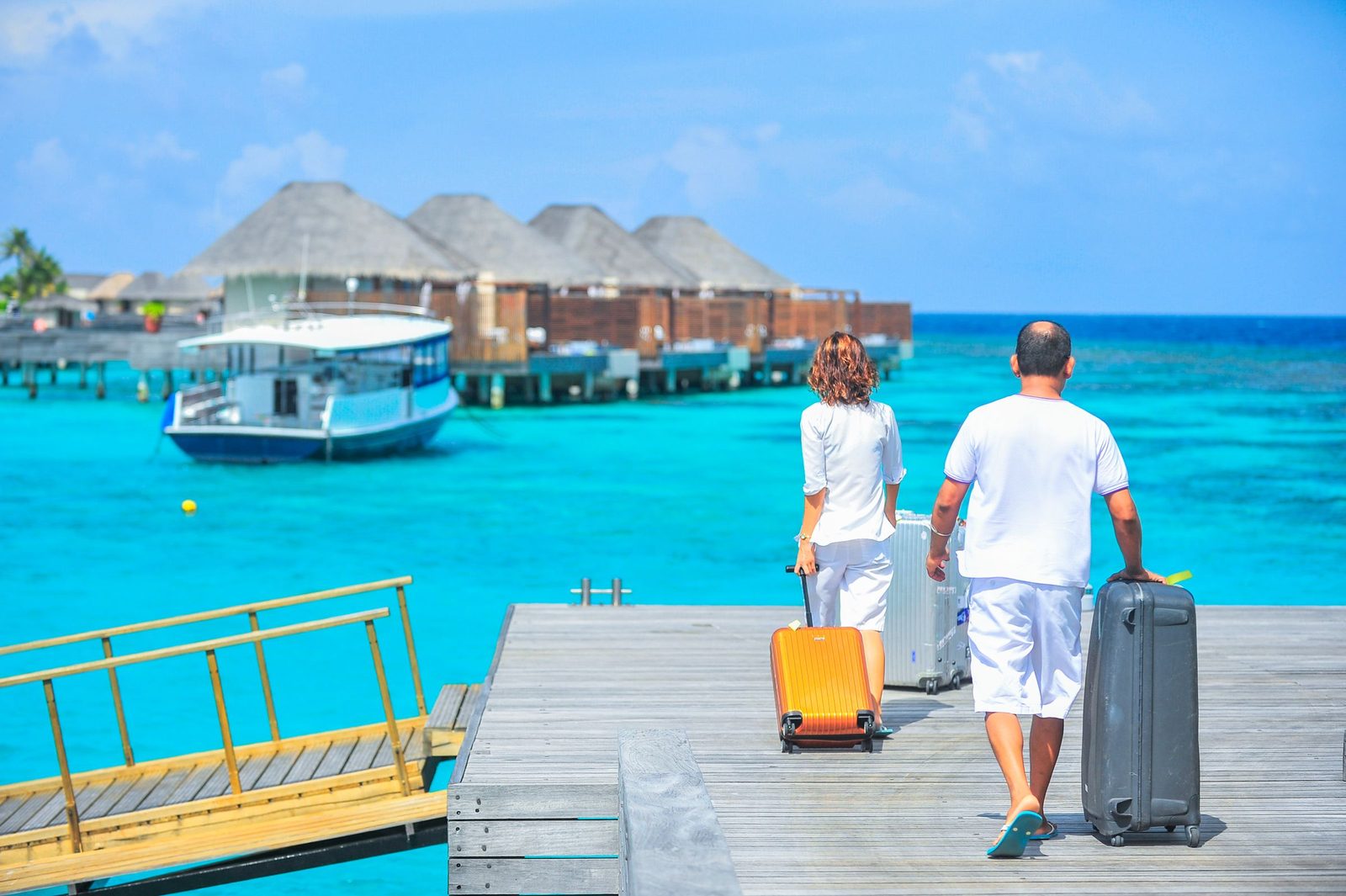
    A couple wheeling their suitcases along a wooden dock toward overwater villas above turquoise water
    Arriving with nothing left to sort out. Photo: Asad Photo Maldives via Pexels

    Whichever way you travel, the goal is the same: a trip that feels effortless from the first morning to the last. Some couples find that by doing the work themselves, and I admire it. Others would rather arrive with a plan already shaped around them and someone ready to answer the phone. If that sounds like you, I would love to hear what you have in mind, whether it is a first anniversary, a milestone year or simply a week that belongs only to the two of you.

  • Cruising from Port Tampa Bay: A Local’s Guide to Parking, a Pre-Cruise Night in Tampa & the Best Shore Excursions

    Cruising from Port Tampa Bay: A Local’s Guide to Parking, a Pre-Cruise Night in Tampa & the Best Shore Excursions

    Disclosure: Some links in this post are affiliate links, including Viator and travel partners Welcome Pickups, Kiwitaxi, Airalo, and EKTA. I may earn a commission if you book through this link. It costs you nothing extra.

    Aerial view of the downtown Tampa skyline across the channel, the route cruise ships take out of Port Tampa Bay

    Sail-away from Tampa is one of the prettiest in Florida: the ship slips down the channel past the downtown skyline, and the terminals are about 15 minutes from the airport. Port Tampa Bay is small, close, and easy, as long as you know where to park, where to spend the night before, and which shore days are worth your time.

    Here’s what I’d want you to know: parking, getting to the terminals, how to spend a fun night in Tampa before you sail, and my favorite shore excursions in Cozumel and the other ports Tampa ships visit most. Tampa is close to home for me, and it’s a port I know well.

    Port Tampa Bay at a Glance

    Port Tampa Bay sits in the Channel District (most locals call it Channelside), just east of downtown Tampa. According to the port, Tampa homeports eight ships from five cruise lines: Carnival, Royal Caribbean, Celebrity, Norwegian, and Margaritaville at Sea. Ships change from season to season. In the 2026–2027 season you’ll see ships like Carnival Paradise, Royal Caribbean’s Radiance and Enchantment of the Seas, Celebrity Summit, Norwegian Gem, and Margaritaville at Sea Islander.

    Most sailings are 4- to 7-night trips to the Western Caribbean and Mexico. Cozumel is the star, and you’ll also see Costa Maya, Progreso, Roatán, Belize City, Grand Cayman, and sometimes Key West or the Bahamas.

    The Three Cruise Terminals

    • Terminal 2: 651 Channelside Drive (right next to The Florida Aquarium)
    • Terminal 3: 815 Channelside Drive (the central terminal, across the street from the main parking garage)
    • Terminal 6: 1333 McKay Street

    All three are close together along the Channel District. Your terminal is assigned by your cruise line and printed on your boarding documents, so double-check it before you leave home and plug that exact address into your GPS.

    Parking at Port Tampa Bay

    Official Port Parking

    The port runs its own cruise parking at two locations: the Channelside Parking Garage at 810 Channelside Drive, across the street from Terminal 3, and a lot at 1331 McKay Street, right next to Terminal 6. Both have self-parking, valet, and oversized parking, plus 24/7 surveillance. The port describes it as “parking within a block” of the terminals.

    • Self-parking: the port’s published tariff lists $19 per space beginning October 1, 2026, rising to $20 on October 1, 2027. The port doesn’t post a daily rate on its website. Instead, you choose your cruise line in its online prepay portal and see your exact total there.
    • Valet: a $20 upgrade on top of parking, according to the port. You drop the car at the terminal and it’s waiting for you when you get off the ship.
    • Oversized vehicles (taller vehicles, RVs, trucks with trailers) cost more and have limited space. Reserve early.

    Steph’s tip: Prepay on the official Port Tampa Bay cruise parking page so you’re not hunting for a spot on embarkation morning. Rates change, so always check the current price when you book. Also good to know: Florida law exempts some vehicles from parking fees, including cars with a Florida disabled veteran plate or specialized accessibility equipment. The port’s parking FAQ has the details.

    Off-Site Parking and Park-and-Cruise Hotels

    Several private lots around Channelside and downtown advertise cruise parking well below the port’s rates. Some are close enough to walk, and others run a shuttle. Many Tampa hotels also offer “park, stay, and cruise” packages, where you stay the night before and leave your car for the week. Before you book any of these, check the shuttle schedule, recent reviews, and whether the lot is covered. A few dollars saved isn’t worth a stressful embarkation morning.

    Getting a Ride Instead

    Driving over from Pinellas or Pasco? A rideshare or a friend dropping you off at the terminal curb skips parking completely. Just follow the port’s signs for passenger drop-off.

    Getting from Tampa International Airport (TPA) to the Port

    One of the best things about cruising from Tampa is how close the airport is. The port calls TPA a convenient 15-minute drive from the Channelside District (allow more time in rush hour). Your options:

    • Rideshare or taxi: Uber, Lyft, and taxis all pick up at TPA, and it’s a short ride to the terminals.
    • Pre-booked private transfer: If you’d like a driver waiting for you at arrivals with a fixed price agreed ahead of time (great for families with lots of luggage), look at Welcome Pickups or Kiwitaxi, which both offer Tampa airport transfers.
    • Cruise line transfers: Most lines sell airport-to-pier transfers when you book your cruise.

    Steph’s tip: Fly in the day before. Flight delays happen, and the ship won’t wait. That brings us to the fun part…

    A Perfect Pre-Cruise Night in Tampa

    Downtown Tampa high-rises framed by palm trees under a bright blue sky

    Tampa is a great city for a pre-cruise night, and most of the best spots are within a few minutes of the terminals.

    Channelside and Water Street

    If you want to stay close to the ship, this is your neighborhood. Sparkman Wharf, right across from the port’s garage, has outdoor food stalls, a lawn, and waterfront seating. It’s an easy, casual dinner spot. Next door, Water Street Tampa has newer restaurants, shops, and bars, all walkable. The Florida Aquarium is right beside Terminal 2 and makes a great morning-of activity. Bonus: the port notes that the aquarium will store your luggage for free when you buy a discounted admission ticket. The terminals can’t hold bags for early arrivals, so this is a handy option.

    The Tampa Riverwalk and Downtown

    The Tampa Riverwalk is a waterfront path along the Hillsborough River that connects many of downtown’s parks, museums, and restaurants. Walk or rent a bike at sunset, stop by the Tampa Bay History Center, and cross the river to Armature Works in Tampa Heights, a historic building turned food hall that’s one of my favorite places to eat in town.

    Ybor City

    Tampa’s historic Latin Quarter is all brick streets, wrought-iron balconies, cigar shops, and the free-roaming Ybor chickens. Have dinner at the Columbia Restaurant, which dates back to 1905, or let a local guide show you around on the Historic Ybor City Food Walking Tour. You’ll taste your way through Cuban, Spanish, and Italian dishes while learning how Ybor got its start.

    Getting around: The TECO Line Streetcar connects Ybor City, the Channel District (including a Port Tampa Bay stop), and downtown. It has been fare-free for years, but its funding is renewed periodically, so check the streetcar’s website for current fares and hours before you ride.

    Coming from the Clearwater Side?

    If you’re staying on the Pinellas side or arriving a day early, the Zip Line Adventure over Tampa Bay in Oldsmar is a fun way to burn off energy before a week of cruise buffets.

    The Best Shore Excursions from Tampa Cruises

    Two cruise ships docked side by side in turquoise water at a Caribbean port in Mexico

    A quick word before the list: when you book an independent excursion, you’re responsible for getting back to the ship on time. Pick tours that end well before all-aboard (I like at least a 90-minute cushion), and read each listing’s meeting point carefully.

    Cozumel, Mexico

    Crystal-clear turquoise Caribbean water over a coral reef off Cozumel, Mexico

    Cozumel is on almost every Tampa itinerary, and it’s famous for some of the clearest water in the Caribbean. Here are my top picks:

    • Snorkel the famous reefs: The Cozumel Snorkeling Tour: Palancar, Columbia and El Cielo is a half-day boat trip to three of the island’s best-known spots, including the shallow El Cielo sandbar, known for its starfish. It’s good for beginners. Bring cash for the marine park fee.
    • Snorkel by catamaran: For a roomier, more relaxed ride, the El Cielo Cozumel Snorkeling by Catamaran visits the reefs and adds a beach break with drinks and snacks.
    • Mayan ruins plus beach time: Mayan Ruins and Beach Time pairs a guided visit to the San Gervasio archaeological site with lunch at a beach club. You get culture and a margarita in one day.
    • An easy beach-park day: Chankanaab Park All-Inclusive Day Pass covers beach loungers, snorkeling right off the shore, lunch, and gardens. It’s a great choice for families and multi-generational groups.
    Shaded white-sand beach with palm trees and calm blue water in Cozumel, Mexico

    Costa Maya, Mexico

    The cruise port at Costa Maya is a destination in itself, but the big draw is the jungle-wrapped Mayan site of Chacchoben. The Chacchoben Mayan Ruins Excursion is a half-day guided trip with round-trip transportation.

    Progreso, Mexico

    The great pyramid of El Castillo at Chichén Itzá on Mexico's Yucatán Peninsula under a blue sky

    Progreso is your gateway to the Yucatán, and the bucket-list trip here is Chichén Itzá. It’s a long day, roughly two hours each way, so a small group with a punctual guide matters. The Progreso Shore Excursion: Small-Group Chichén Itzá is built around cruise-ship timing. Compare the return time with your all-aboard time before you book.

    Roatán, Honduras

    Roatán is lush, green, and made for adventure. The Zip Line Adventure with Wildlife and Snorkel combines ziplining over the jungle, a stop to see sloths and monkeys, and reef snorkeling in one action-packed day.

    Belize City, Belize

    Belize is a tender port, so you’ll ride a small boat from the ship to shore. That takes time, so leave extra room in your schedule. The classic Belize experience is cave tubing, floating on an inner tube through river caves in the jungle. Cave Tubing with Lunch includes transportation from the cruise port.

    Grand Cayman

    Grand Cayman is also usually a tender port. Stingray City is the must-do here: you stand in waist-deep water on a sandbar while friendly southern stingrays glide past. Stingray City Experience Plus Two Snorkeling Stops adds reef snorkeling and meets close to the cruise terminal.

    Key West, Florida

    Key West shows up on some Tampa sailings, and it’s an easy port to explore on foot. If you’d like to get on the water, the Key West Snorkeling with Breakfast and Mimosas trip heads out to the reef in the morning, so you’re back in plenty of time to walk Duval Street.

    Steph’s Quick Cruise-Prep Checklist

    • Documents: Check your cruise line’s ID requirements well in advance. A valid passport is always my top recommendation, even on round-trip sailings from Tampa.
    • Stay connected: Ship Wi-Fi and international roaming can get pricey. An eSIM from Airalo is an easy way to get data in Mexico and Central America while you’re in port.
    • Travel insurance: Missed connections, medical care abroad, and weather delays happen. Compare plans from a provider like EKTA, and check that the plan covers cruise-specific delays and missed departures.
    • Cash in small bills: Handy for marine park fees, tips, and taxis in port.
    • Reef-safe sunscreen: Many Caribbean snorkel sites ask for it, and the reefs will thank you.

    Ready to Sail from Tampa?

    Cruising from Port Tampa Bay is easy once you know the ropes: park early, give your shore days a 90-minute cushion, and get out on deck for that skyline sail-away.

    Questions about sailing from Tampa? Send me a note.

    Prices, parking rates, schedules, and tour details change often. Please check current rates and details with the port, cruise line, or tour operator before you book. Prices as of 10/24/2026. Subject to change and availability.